

The Ancient Irreligious and the Failure of Modern Classification

Introduction:
This text does not approach the Druze as a social identity, a community seeking recognition, nor as a belief system seeking to be inserted into existing categories. It treats them as a philosophical position articulated within a specific historical language, under strict conditions of deliberate reserve. What follows is neither a sociological description, nor a theological reconciliation, nor a political argument. It is a discussion conducted at the level of conceptual structure.
Anyone expecting an account of practices, a tracing of influence-chains, or a defense of communal legitimacy will find none of that here. This text rests on a distinction between religion as an institutional and historical form, and belief as an orientation toward an ultimate principle. Without suspending modern assumptions about publicity, identity, and doctrine, the Druze position can only appear as an anomaly. This introduction exists solely to set the horizon of reception.
- The Error of Coordinates
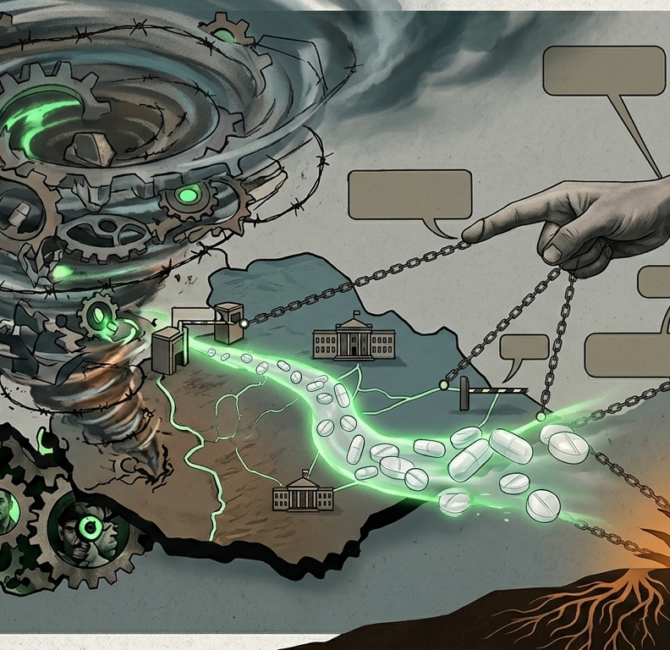
The Druze have not been misunderstood because they are obscure, but because they have been located incorrectly and read outside their context. Every attempt to describe them begins by situating them within coordinates they never inhabited, and ends in astonishment at the failure of description. This is not an accident. It is a methodological failure.
Modern systems rarely ask what a thing is. They ask where it can be stored so that it no longer remains problematic. In this sense, understanding the Druze is not difficult. What is difficult is positioning them without rupturing the conceptual tools used to understand them.
Politically, the Druze are reduced to numbers: heads to be counted, blocs to be courted, margins to be secured. Metaphysics disappears entirely, as if their worldview could be subtracted without remainder. What remains is a demographic abstraction that behaves, votes, or aligns, but never thinks.
Academically, the reduction is more refined and no less destructive. The Druze are classified as an ethno-religious group positioned somewhere between Islam, Gnosticism, and Neoplatonism, indexed, footnoted, and neutralized. Taxonomy replaces engagement. Description replaces confrontation. The result is a body of literature that knows about the Druze while remaining structurally incapable of comprehending them.
Linguistically and theologically, the distortion deepens further. Because the Druze wrote in Arabic, they are read through Arabic as it was overdetermined by the Qur’anic text and Islamic theology. Shared language is mistaken for shared metaphysics. Concepts are assumed to align simply because the words resemble one another. What is overlooked is that Arabic itself became a captured language, semantically reorganized around revelation, prophecy, and law. The Druze wrote from within that language while resisting the theological gravity that shaped it.
These political, academic, and theological reductions do not merely obscure the Druze position. They prevent it from appearing at all. They impose coordinates in which the Druze can only be misread: as a minority, a sect, or a deviation.
The central claim of this text is simple and deliberately uncomfortable: the Druze do not belong inside the categories of religion, politics, or Islamic theology as they are institutionally and historically understood. The Druze did not emerge as a branch of Abrahamic faith, nor as a communal identity seeking political survival, nor as an esoteric appendix to Islam. They emerged as a philosophical rupture articulated in a religious language without submitting to the forms of institutional religion.
To read the Druze correctly, one must first suspend the conventional maps used to locate them. This text does not attempt to reconcile the Druze with those maps. It argues that the maps themselves are the problem.
- Counting Bodies, Classifying Souls
The first reduction imposed on the Druze has been political, and it remains the crudest. Modern politics recognizes quantities, not worldviews. Communities do not appear as thinking entities, but as measurable units whose relevance is proportional to their number and strategic position. In this logic, the Druze become a demographic fact, a minority to be managed, protected, mobilized, or neutralized.
This reduction is often defended as realism. In reality, it is an abdication of thought. By reducing a community to its numerical presence, politics erases the very dimension that explains its historical persistence and internal coherence. Metaphysics disappears here not because it is irrelevant, but because systems of power are incapable of registering it.
The academic containment is more sophisticated and therefore more deceptive. Where politics strips the Druze of meaning, academia surrounds them with it. The ethno-religious classification grants them a place on library shelves: a closed society, a syncretic tradition, a minority religion shaped by identifiable influences. This appears respectful. It is not. It transforms a philosophical position into an object, something to be observed rather than confronted.
Taxonomy functions here as containment. Once classified, the Druze no longer pose a conceptual challenge. Influence replaces rupture. Lineage replaces refusal. The Druze are rendered derivative rather than disruptive, an echo rather than a break.
What both reductions share is an inability to treat the Druze as a philosophical event. Politics sees only bodies. Academia sees only categories. Neither can accommodate a form of belief that does not seek visibility, expansion, or institutional legitimacy.
Understanding the Druze does not begin with placement. It must begin with rupture.
- Revelation Subordinated: Druze Thought as Gnostic Rupture
To understand the Druze, one must abandon the reflex that treats every belief system articulated in Arabic as a variation of Abrahamic religion. This reflex is not analytical. It is theological residue.
The Druze did not emerge as a sect within Islam, or as a reformist deviation from prophetic religion. They emerged as a refusal of the logic that grounds truth in a historical moment of revelation. Revelation is not denied here, but assigned its function. It plays an educational role, not the role of epistemic culmination. Within this framework, prophecy is relativized: it functions as pedagogy and governance, not as the ceiling of knowledge; history is a field of concealment rather than a sacred narrative; and law is a mechanism for regulating the unprepared rather than a path to salvation. This position aligns the Druze with the late antique gnostic and philosophical currents rather than confessional traditions in the structural sense. Truth is not transmitted through a singular historical event. It is apprehended through intellectual recognition and ethical alignment.
Abrahamic theology anchors truth in time: revelation, prophecy, judgement. Druze thought breaks with this axis without abolishing it. Knowledge is not historical. God is not encountered through obedience to revealed law. Divinity is the condition of intelligibility itself. Even Neoplatonic Unity becomes suspect once it is theologized. When the One is moralized, personalized, or subordinated to prophetic authority, it ceases to function as a philosophical principle. Druze metaphysics resists this transformation.
Calling this a religion already distorts it if religion is understood as publicity, ritual repetition, and moral codification. Druze thought moves in the opposite direction: against historicity, against institutionalization, and structurally against clericalism.
This is not heresy. Heresy presupposes the authority it rejects. The Druze position refuses the premise that revelation constitutes the foundation of truth, while acknowledging its historical function.
- Arabic as a Captive Language
The use of Arabic in Druze texts has consistently misled readers. The assumption that shared language implies shared metaphysics collapses under scrutiny.
Arabic did not remain a neutral philosophical medium after the Qur’anic event. It was reorganized semantically around revelation, prophecy, command, and obedience. That theological horizon continues to govern what Arabic is expected to mean. Over time, this horizon has become so dominant that it presents itself as the meaning of the language itself.
When Druze authors wrote in Arabic, they did so from within this constrained medium while resisting its dominant semantic load. They retained familiar terms but redirected their theological gravity.
Grammar survived. Metaphysical openness did not.
This produced an asymmetry between text and reader. Readers trained in Islamic hermeneutics expect revelation, moral law, and salvific narrative. Druze texts offer none of these as a final structure. The result is confusion, followed by misclassification.
The opacity is not artificial concealment. It is the natural consequence of thinking against the conceptual architecture governing the language.
This recognition reframes secrecy. What appears as concealment begins to disclose itself as a structural necessity.
- The Ancient Irreligious
The term “irreligious” has been emptied of precision. It is commonly taken to mean disbelief or indifference. Neither applies here. To describe the Druze as irreligious is not to deny their belief in God, but to deny that belief requires religion.
At the core of Druze thought lies a distinction largely absent from modern discourse: belief in an ultimate principle does not necessitate institutional religion. God is not accessed through ritual, law, or historical narrative. Divinity is apprehended through knowledge and ethical alignment.
This position is ancient. Long before secularism, philosophical traditions articulated belief without religion. Religion was understood as pedagogy for the many, not as the final form of truth.
Modern irreligiosity is reactive and psychological. It emerges from coercion and disappointment. The Druze position is neither reaction nor rebellion. It stands outside the belief-disbelief binary entirely.
Calling the Druze “the ancient irreligious” is therefore accurate as an analytical description rather than a self-definition. What the modern discourse celebrates today as “spiritual but not religious” is a distorted echo of a stance that once demanded rigor, discipline, and restraint.
This irreligiosity is structural, not rhetorical. And it makes indiscriminate dissemination impossible.
- Secrecy as Method, Not Fear
Secrecy is routinely explained as a survival tactic. This explanation is insufficient. In the Druze case, secrecy is methodological. It protects truth from degradation rather than from exposure to enemies.
When belief is not grounded in law or ritual, knowledge depends entirely on the preparedness of the knower. Without conceptual discipline, metaphysical ideas collapse into superstition or moralism. Philosophical traditions have long recognized this risk. Pythagorean silence and Maimonidean concealment were not acts of exclusion but of epistemic responsibility.
Druze initiation restricts interpretation, not information. The uninitiated are not inferior. They are unprepared.
Institutional religion universalizes by simplification. Druze thought restricts access to preserve coherence. Invisibility is accepted as the cost of fidelity.
Secrecy is not an anomaly in Druze history. It is its organizing principle.
- The Failure of Modern Systems
Modern politics, academia, and secularism share a demand for legibility. Beliefs must be public. Identities must be declared. Doctrines must be transparent. Druze thought rejects this demand.
Politics cannot accommodate belief without claims of power. Academia cannot tolerate resistance to full disclosure. Secularism cannot process a faith that refuses both religion and disbelief. Each system attempts to translate the Druze, and each attempt ends in failure.
What appears as marginality is distance. What appears as silence is refusal. What appears as secrecy is coherence under pressure.
- Outside the Map
The Druze are not misplaced. The maps are inaccurate. They are not a minority religion awaiting recognition, nor a sect awaiting reform. They represent a limit-case that exposes the assumptions underlying modern religion, secularism, and modern identity.
To encounter the Druze seriously is not to add another category, but to confront the possibility that belief does not require institutional religion; that language can resist theological capture; and that secrecy can be an intellectual virtue.
Discomfort is the appropriate response when the map fails and the territory refuses correction.
The Druze have not asked to be understood on modern terms. They have simply endured while those terms have failed to contain them. That endurance is not accidental. It is the consequence of standing deliberately, and quietly, outside the map.
Swaida Intellectual Digital Magazine. (2026). Vol. 1(2). ISSN: 3099-3172 (online).