
An In-Depth Dialogue with Dr. Fandi Abu Fakher on the Early Period of French Mandate Entry into the Mountain
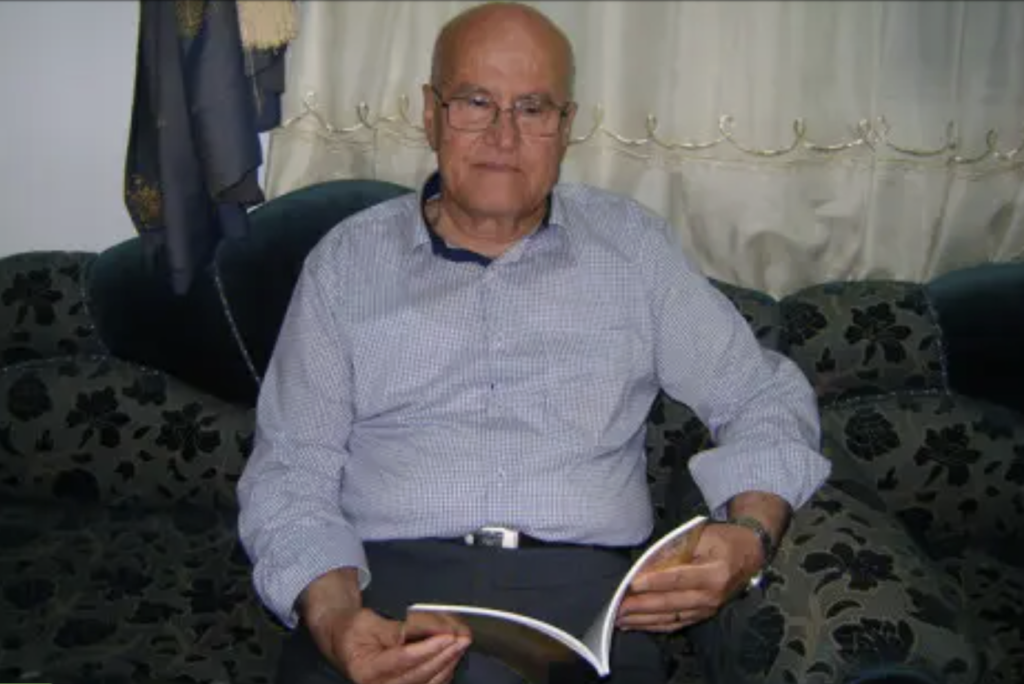
Date of Interview: November 17–28, 2025
Conducted through: Audio recordings on WhatsApp, archived in the Swaida Intellectual Magazine collection
Interviewer: Nawras Aziz
Introduction
At the outset, welcome to you, Dr. Fandi, and our sincere gratitude for offering your academic testimony through your responses to a set of questions we have carefully prepared specifically to gather the largest amount of documented information on an unclear period for researchers and those interested in the history of Swaida—namely, the period extending from late 1920 through the end of 1921, which encompasses the entry of French Mandate forces into the mountain, their control over it, and their separation of it from its surroundings without military confrontations.
We will present to you eighteen questions organized under six thematic axes, with our deep appreciation for your responses in advance:
Axis One: The General Situation in the Mountain Prior to French Entry
Question 1.1: How would you characterize the political, military, and administrative situation in the Jabal al-Druze in the months preceding the entry of French forces in late 1920?
Allow me, at the outset, to extend greetings to the serious writer and historian Mr. Nawras Aziz, and to congratulate him on receiving his Master’s degree in History. I then thank him for directing these questions toward me to answer.
I believe I should say first: What is the historical nomenclature of the mountain across centuries from Umayyad rule to Abbasid, to Mamluk rule until the second half of the nineteenth century?
It must be said that the historical nomenclature of the mountain from Abbasid rule and Mamluk rule through the final third of the nineteenth century was Jabal Hawran, and Lebanese, Ottoman, and many foreign sources referred to the mountain by this designation, considering it part of Greater Hawran, which comprised the mountain, al-Laja, al-Nuqra, al-Jidur (present-day Dara’a), Quneitra, and Ajlun. An example of this is that in 1310, the Mamluk Sultan sent a letter to the Ottoman-designated Deputy of Damascus discussing Hawran, which contained the following:
“In the name of God, praise be to Him who has given us dominion over lands and subjects. We have learned that Hawran has been emptied of inhabitants due to taxation, and we have learned that you have levied taxes. Neither have you sent to us nor have you given to the soldiers.”
In that period, most cities of Hawran were largely depopulated for many reasons, including excessive confiscations, excessive taxation, the method of tax collection, and subsequently the Bedouin raids on all of Hawran, both plain and mountain. This does not mean that the Bedouins were enemies of the inhabitants; rather, the dominant economic and social lifestyle among Bedouin tribes was based on raiding—Arab tribes raided one another.
Regarding the nomenclature of the mountain, I would also say that the designation “Jabal Hawran” was the common usage in the sixteenth, seventeenth, and eighteenth centuries in official correspondence, and it appeared in what European travelers wrote in official Ottoman documents. The designation “Jabal al-Druze” was known to refer to the Shuf region and the Shuf districts in Lebanon; there it was said about that region “Jabal al-Druze,” whereas the inhabitants of Hawran—mountain and plain—were called “Hawarnah” by the Lebanese. Here I recall an example of a manuscript authored by an anonymous Druze writer, who apparently did not dare to append the manuscript or write it in his own name, fearing Ahmad Pasha al-Jazzar and the Christian and Druze Lebanese feudal lords and others, because it was written in a social spirit that deeply felt the pains and hardships of life and the living conditions of productive forces—peasants and the common people. This manuscript was placed in the Prussian Library in Berlin; I obtained it, edited it, and published it in Lebanon in 2016. In this manuscript, the anonymous author wrote the title:
“This is the history of Jabal al-Druze and the two provinces of the Levant and Egypt and the French campaign upon Egypt and the Levant.”
Jabal al-Druze as intended by this title is therefore Lebanon and not Jabal Hawran. The nomenclature by contrast for the mountain of present-day Swaida Governorate is Jabal Hawran. This designation continued in Ottoman documents, and I have, for example, approximately thirty-two books consisting of annual reports issued by the Ottoman state under the title “Province of Syria” from 1868 through 1900, always referring to Jabal Hawran.
In the final decades of the nineteenth century, and for reasons aimed at severing the bond between the inhabitants of the plain and the mountain and other regions in Hawran—especially after everyone came to the fore in the opening of the second half of the nineteenth century in a decisive confrontation with the Ottoman army in the city of Izra’, a plains area—because of this unified stance of the inhabitants of Hawran, both mountain and plain and many regions, the Ottoman army was defeated with a decisive defeat.
Following this defeat of the Ottoman army, the Ottoman administration, whether in the Province of Syria or in the capital of the Ottoman sultanate, began to contemplate how to sever this relationship between the inhabitants of all of Hawran.
In order to sever this relationship, documents began to refer to the mountain by the name “Jabal Druze Hawran”; they thus shifted from “Jabal Hawran” to “Jabal Druze Hawran.” And at the beginning of the twentieth century, the designation “Jabal al-Druze” became widespread entirely, with the aim of severing social relations among the inhabitants of Hawran in order to exercise actual control over the mountain, because Ottoman rule remained nominal until the entry of the Ottoman army in 1890 in the month of June, after it faced a peasant uprising in the Shaqrawiya region west of Swaida, during which approximately 400 rebels from the common people who confronted this army were martyred. Following this decisive battle, the Ottoman army entered the city of Swaida and wreaked havoc, beginning to construct the Swaida Citadel east of the city. There, after construction was completed, the Ottoman forces concentrated their artillery and troops. Nevertheless, in the final decade of the nineteenth century, during the uprisings against the Ottoman state that occurred in 1895 and continued intermittently until 1897, the citadel was besieged. Although the Ottomans established official institutions in Jabal Hawran, they remained fragile.
Question 1.2: What was the position of the mountain in the vision of the Arab government in Damascus before its collapse? And how was this reflected in the mountain’s relationship with Faisal’s authority?
I would like to begin by saying that the relationship between Sultan al-Atrash and his companions from the free men of the mountain existed before the launch of the Great Arab Revolt. Perhaps what confirms this is a letter that Faisal sent to Sultan al-Atrash from Damascus upon his return from his latest visit to Ankara, where he met with the free men of the Al-Fatat Arab Society and became a member of this society. He sent a letter to Sultan al-Atrash consisting of a few words: “Tell Sultan to prepare the chestnut horses,” meaning thereby to prepare for the revolt.
It is certain that this phrase indicates without doubt older relationships and communication between the two leading men, Sultan al-Atrash, the Commander-in-Chief of the Great Syrian Revolt, and Faisal son of Sharif Hussein, Sharif of Mecca. Therefore, the relationship began earlier, but how was this relationship manifested in reality?
Not only through communication, but through letters with allusive and profound meanings. When Faisal came to Damascus before the collapse of Ottoman rule, he stopped in the Damascus countryside and asked one of his companions to get off the train and ask: who has entered Damascus? This question was indeed directed to people present in al-Kiswa, and he was told: Sultan al-Atrash and his companions. He was very pleased because they had entered it before the English—that is, Sultan—and before that, Faisal had sent a message to Sultan: “My brother Sultan, enter Damascus before the English enter it.”
As for Faisal, he entered it with General Allenby.
Such momentous events are difficult to abbreviate, no matter how much one strives for conciseness and brevity; they are difficult to condense in order to convey their importance.
Sultan entered Damascus before Faisal and the English entered, and he arrived with throngs of rebels from the mountain, among them from the Hawrani plain and other regions. There they sang the well-known chants. Sultan and his companions raised the Arab flag above the building of the municipality in al-Marjah Square. When Faisal arrived in Damascus and began to form the Arab government, or Faisal’s government, Sultan asked for nothing. Many meetings took place during this period, and Sultan, with his keen insight, realized that what was more important than governments and more important than politics was to return to connection with the land. Sultan returned to al-Qurayya and resumed his work in agriculture.
Faisal appointed Nasib al-Atrash as the representative of the mountain in Damascus, and the relationship between the two men, Faisal and Sultan, grew deeper and more respectful.
Why did Faisal appoint Nasib al-Atrash as representative of the mountain in Damascus? Because Sultan al-Atrash abstained from positions, benefits, and fame.
As for the second part of the question—how was this reflected in the mountain’s relationship with Faisal’s authority?
We must return to the internal situation in the mountain before the launch of the Great Arab Revolt, where the mountain, or rather the leadership of the mountain, was divided into two camps:
The first camp, headed by Sultan, who was in revolt against Ottoman (Turkish) occupation, with many, many patriotic figures whose names do not fit within the time available to mention them. Among the most prominent was Hammad al-Barbur, who was later martyred in the Battle of Tell al-Kharuf in confrontation with the advance of the French army into the mountain.
The other camp was well known to all, represented in the other traditional leaderships, among them relatives of Sultan al-Atrash in Swaida, in Uriya, and in Salkhad.
There are events that must be brought to light. For example, in 1917, Ottoman forces were present throughout Syria and in the mountain in the Swaida Citadel, in the Salkhad Citadel, in the Darara Citadel east of Uriya, and in the Bosra al-Sham Citadel. In the spring of 1917, a group of intellectual leaders and patriotic leaders in the Levant met, among them, for example, Sheikh Saeed al-Bani from Damascus, Subhi al-Omari, who was a high-ranking officer in the Ottoman army and who defected and joined the Great Arab Revolt, as well as Khalil al-Sakakini, the Palestinian intellectual, patriot, and Arab nationalist, and other figures, who stayed as guests of Sultan for more than a week.
In his reception hall in al-Qurayya, it was decided to declare the al-Qurayya area a region liberated from the Turks, while Ottoman armies were stationed in the citadels surrounding al-Qurayya. This position needs to be taken into account when speaking of the Great Arab Revolt. Thereafter they raised the Arab flag in Sultan al-Atrash’s reception hall. On his part, Hammad al-Barbur went directly and raised the Arab flag above his house in Umm al-Ruman. Very often came threats to Sultan al-Atrash in these patriotic positions of his and his companions’ support for the Great Arab Revolt in its Arab nationalist dimension—threats from within and from Jamal Pasha with the aim of demolishing Sultan’s house and demolishing Hammad al-Barbur’s house.
From here we can say in response to the second part of the question that the relationship was very deep between Sultan and the groups and leaderships that gathered around Sultan and between Faisal. This does not mean that the relationship should be crowned with positions or privileges, but during the recent period from 1918 until 1920 and even the announcement of the constitution and the designation of Syria as the Arab Kingdom, Faisal’s government was not able, throughout all regions of Syria, to establish effective institutions, particularly in the mountain. Why? Particularly in the mountain? Because from 1910 until the Great Arab Revolt and until Sultan al-Atrash’s entry into Damascus, there were no more effective institutions of the Ottoman state in the mountain. The judiciary, for example, was a tribal judiciary, and the sheikhs of the mountain were those who administered the affairs of the villages in their areas, in their cities and in their villages. Therefore, it can be said entirely that the relationship was deeper than what can be indicated by a position here and an office there. The objectives were one, and the goals were one: building a modern state that would be for all its citizens—a state that transcends sects, that sees inhabitants as citizens and not as sects. And whoever returns to the constitution of 1920, which was announced on March 8, 1920, with the announcement of Syrian independence, will see that constitution to be, to a large extent, a civil constitution. Even in many of its articles, it made Faisal a king, but a king who possesses but does not govern. Therefore, here emerges a question: why did this constitution come with such maturity? Because those who wrote the constitution were intellectuals holding advanced degrees in law, among them, for example but not exclusively, Ibrahim Hananu, Abd al-Rahman al-Shahbandar, and many other figures.
The mountain remained in its social and political situation, governed largely by a pre-state mentality, because there were no formal institutions.
Question 1.3: Can it be said that Jabal al-Druze enjoyed a form of self-governance or actual independence even before the French entered?
Simply yes, because as I pointed out before, the institutions that the Ottomans established from 1868 until the end of the nineteenth century were extremely fragile, and there was a large rupture between them and the population. This led to the formation of councils such as the council of the Qaimmaqam, which resembles the provincial council in our present day, or the council of the district or the council of the notables, and the courts that were called at that time the Court of Claims. What confirms the local character of all these institutions is that the Turks brought sheikhs from each region based on the prominence of the sheikh in his area and made them members of the Qaimmaqam council and members of the district council and members of the Claims court, which is to say the judicial courts.
But in general, the mountain was governed by a pre-state mentality. There was no self-governance based on institutions, and division existed even before the French entered, especially after the First World War. A faction appeared that supported the continuation of Ottoman rule and a faction against the Ottomans, headed by Sultan al-Atrash.
Axis Two: The Moment of French Entry (Late 1920)
Question 2.1: How did the entry of French forces into Swaida occur? And did they face local resistance initially?
Sultan, despite his distance from positions and his return to work on his land, was very cautious about the French entering the mountain. And in this regard, it must be noted that Sultan’s relations with patriotic forces in Damascus did not cease. When Gouraud landed on the Syrian coast, Sultan feared French occupation of the Syrian coast and that he would then turn toward Damascus in accordance with the Sykes-Picot Agreement. Therefore, when Gouraud entered Syrian and Lebanese territories toward Damascus, Sultan had prepared by organizing a military campaign to stand alongside Yusuf al-Azmah in the battle that took place and was decided quickly at Maysalun. However, as is well known, Sultan’s campaign reached al-Mazra’a, or the former prison, and news reached it of the battle’s conclusion, so it returned from where it had set out.
After the French entered in late 1920 and early 1921, significant political activity occurred within the mountain between moderate tendencies and tendencies seeking self-governance or an independent state. Finally, after several meetings, a conference was held in the city of Swaida, and conditions were laid down for the establishment of a Druze entity or state. Sheikh Mahmud Abu Fakher carried these conditions to Damascus and met with the administration of French occupation and discussed with them the demands of the Druze for the establishment of this entity. However, the French did not agree to all the conditions, so these conditions were modified and became known as the De Caix-Abu Fakher Agreement.
Before Gouraud came to Damascus, it happened that Sultan al-Atrash and Fadl Allah Hinnidi were in Beirut, and Sultan tried to understand Gouraud’s intentions and met him with Fadl Allah Hinnidi. They sensed what Gouraud would do, but conditions within the mountain in the first two years of occupation were a difficult labor. The Druze state was formed, and Salim al-Atrash son of Mahmud son of Shibili al-Atrash—who died in 1904—was elevated. He did not bear the title of Amir, nor even the title of Pasha that the Turks had granted to the house of Swaida, Mardak, and Shahba.
The French wanted a figurehead president, but if they chose a figurehead president with the rank of Pasha from former Turkish times, there was more than one Pasha. Therefore, in 1921, the French High Commissioner issued a decree by which he named Salim son of Mahmud son of Shibili al-Atrash as Amir and appointed him president of the state. However, in reality, it was the French advisor who administered power, not the president of the state.
The French entered without war against the mountain, especially after the setback of the campaign that went to support Yusuf al-Azmah. However, in 1921–1922, new activity began with the arrival of Adham Khanjar and his taking refuge in al-Qurayya. On this basis, I conclude my answer to this question by saying that the entry of French forces into Swaida did not face armed resistance initially, but that first period was, in my view, a period of preparation for what was to come and anticipation of what would happen and consideration of the future.
Question 2.2: Who were the most prominent local leaderships that dealt with the French at that moment? And how were the positions of the sheikhs divided between accommodation and rejection?
After the French formed a Druze state, they needed an administration. They brought traditional leaderships to the stage of the mountain—first, first-rank leaderships, and thereafter, second-rank leaderships—and from these leaderships they formed what is called the Representative Council. Most of the leaderships of the first rank, except Sultan al-Atrash and Hammad al-Barbur and some other figures, did not participate in the Representative Council or the government. However, in all fairness, when the Syrian Revolt broke out, there remained alongside the French from the traditional leaderships only Faris al-Atrash.
Even members of the Representative Council aligned themselves with the Revolt. For example, Fadl Allah Hinnidi was one of the rebels who was martyred in the battles against the French when the Great Syrian Revolt broke out. Many other figures dealt with the French—the chief of gendarmerie Hasani Sakhr, the judge of the doctrine Sheikh Mahmud Abu Fakher. Most of the official departments that the French Mandate established had at their head individuals from the Al-Atrash family and they dealt with the French. But how does one evaluate their positions? This requires a deeper study.
The positions of the sheikhs were divided between accommodation and rejection. Rejection is represented by Sultan and the patriotic camp. I do not mean here that the others were stripped of patriotism—no. I have brought the example of Fadl Allah Hinnidi. Therefore, the faction of rejection initially was small, but it began to prepare for the future.
Question 2.3: What was the extent of the role played by figures such as Sultan al-Atrash, Fuad Salim, and others in that initial phase?
Regarding Fuad Salim, he was one of the most prominent figures who worked in organizing resistance against Ottoman rule and was one of the most prominent figures in the Great Arab Revolt. With Gouraud’s arrival in Beirut and then Damascus, Fuad Salim definitively left Damascus and worked in the Emirate of Transjordan under Prince Abdullah in various positions.
After being excluded from King Abdullah’s emirate in Transjordan, he was forced to go to Cairo and did not return to the mountain except after the Battle of al-Mazra’a. Before this period, he was neither in the mountain nor in Lebanon to play a role in the first year of French occupation of Syria or the mountain.
With the launch of the Great Syrian Revolt, specifically the Battles of al-Kafr and al-Mazra’a, neither Fuad Salim nor Adel Arslan were present in the mountain, nor even the patriotic figures who came from Damascus and Hama. None of them participated in the first two battles; rather, they came later. Fuad Salim participated in the Battle of al-Musayfirah and thereafter and was later martyred in the Battle of Jabatat al-Khashab.
As for Sultan’s role, it is necessary to refer to the year 1922 and the arrival of Adham Khanjar to take refuge in Sultan’s domain, after he was sentenced to death because of the well-known incident—the attempted assassination of Gouraud. When Adham Khanjar reached al-Qurayya, he was arrested. Some say, like Fuad Salim, that Adham was arrested while he was in Sultan al-Atrash’s house. There are other narratives that support this account, saying that when he was arrested from inside the reception hall, Sultan’s wife entered and said to those arresting him: “Woe unto you! You are taking him from Sultan’s reception hall! Woe unto you from Sultan’s wrath.” In contrast, some say that he was arrested by the director of al-Qurayya district without knowing who he was and before entering Sultan’s house.
In fact, Adham Khanjar was arrested and they took him from al-Qurayya eastward toward the village of al-Raha, and from there they transferred him to Swaida. After Sultan learned of the matter, he initially tried, through diplomatic means and letters, to secure Adham Khanjar’s release, in the best manner. He could not say in his letter to the French: “You have occupied our country, and this is a rebel, and you must release him.” So he was forced to say: “You have violated customs and traditions. It was not agreed between the Druze and the French on this basis. You should have respected customs and traditions. Adham Khanjar is my guest, and it is not permissible for you to arrest him,” and so forth. When he despaired of securing Adham’s release, he was forced to rally his companions, saying to them: “Raise the banners,” and he surrounded Swaida.
It is said that the number of those who answered the call was approximately 1,500 people. We do not know the accuracy of this information if there are no precise documents that show us the exact number.
Sultan began to watch the French so they would not take Adham Khanjar to Damascus, and he became ready to use weapons to secure Adham Khanjar’s release. Later, he and some of his companions clashed with a group of French military armored vehicles that came to transfer Adham Khanjar to Damascus via Dara’a, and the Battle of Tell al-Hadid occurred. Lieutenant Boxsan and others were killed, and a number of soldiers were captured, but ultimately he was unable to free Adham Khanjar. Sultan and his companions were sentenced to death in consequence of this battle, and he fled to Transjordan.
Axis Three: The First French Administration in the Mountain
Question 3.1: How did France organize its administrative and military presence between late 1920 and the end of 1921?
After establishing borders for the Druze state in the various regions of the mountain in the form of concrete blocks inscribed with the phrase “borders of the state,” such as a concrete block placed near the village of al-Dour, which marked the western borders of the mountain.
As for the departments that were established in Swaida, they were to serve French occupation. For example, a department for the Representative Council and also a department for the State Divan, in addition to departments for the judiciary such as judges who were assigned by the French—for example, the position of the judge of the doctrine, which was held by Mahmud Abu Fakher.
Regarding the French military presence, in the years 1920–1921, approximately 90 sheikhs visited Gouraud in Beirut, and some of them were given money and gold. This facilitated the French task of military entry into the mountain without confrontations through the co-optation of the sheikhs and leaders.
Question 3.2: What were the most important procedures or policies that France attempted to impose on the mountain? And how did the inhabitants receive them?
In schools, for example, teachers from Lebanon were employed, and these teachers were appointed as spies. Among them was Philip Hitti, the great historian, and many other teachers in the villages who transmitted information and movements to the French.
France established schools, the first of them in villages that contained Christians—not out of love for Christians, but to create a rift between them and the Druze. For example, Hamud al-Qabbani, one of the students of the school in Shahba during the French period, told me: “The first [ranked student] in Shahba school should be Christian, not out of love, but to provoke the Druze against Christians. The second student should also be from the Amir family, again to provoke the hatred of Druze families toward the Amirs.”
In truth, I do not have many documents regarding the administrations.
Question 3.3: What was the nature of the relationship between the French Commission in Damascus and the local leaderships in Swaida?
After Salim al-Atrash was granted the rank of Amir for the first time in the history of the mountain, his role was, as we mentioned earlier, nominal. The actual rule was exercised by the French advisor. Many of the leaderships were not content with communication with the Commission in Damascus; rather, they had communication with the High Commissioner, whose seat was in Alya, because of competition among themselves and because of the desire to obtain more benefits and favor with the French.
I believe that the relationship did not exceed the bounds of each leader’s interests and his image before his family so as to appear as someone with an irrefutable voice before the French Mandate administration.
Question 4.1: Did the region witness clear political divisions between supporters of the French and those opposed to them?
The French did not enter the mountain before they probed the depths of social and political life within Syria and within the mountain. For example, French intervention occurred in the late nineteenth century and early twentieth century—that is, before direct French occupation of the mountain—through Jesuit missionary schools and secular European French schools. However, the latter did not actually enter the mountain and Hawran; it was the missionary schools through the Jesuits that actually entered. As you know, Jesuit missionary work was forbidden in France since the French Revolution, but they were permitted to work within French colonies and areas of French influence. Therefore, the French were preparing for the occupation of Syria, including the mountain, from the late nineteenth century onward.
Subsequently, they exploited the tribal structure in the mountain. After reading it, they found that they had to search for a tribal personality to be granted a title or rank higher than what was granted in Turkish times—that is, Pasha. The French High Commissioner took the initiative to issue a decree in 1921 naming Salim son of Mahmud son of Shibili al-Atrash as Amir of the Druze state. However, actual rule was in the hands of the French advisor, and Amir Salim was a facade for social issues within a tribal vision.
From another angle, the French benefited from the idea of the tribe existing in Swaida as a political character for the Druze state. They noticed that there was a clear family hierarchy in the mountain, especially after the popular movement and the entry of the Turks into the mountain. The first family was Al-Atrash, and then other families came, and there was significant competition among them (Amir, Azzam, Abu Asaf, etc.). The old sovereign families saw their role end, such as (al-Hamdan, Abu Fakher), and the approach was framed such that the head of the family or tribe would have the final say and would then be responsible for communication with first-rank families.
There is another dimension that both the French and the Ottomans reinforced: the marriage of tribal thinking with feudal policy. For example, the poor sheikh who owned some small plots of agricultural land became exercising an obvious superior role over his social base of family members.
The French divided the mountain initially into nine districts and appointed directors of those districts from the dominant first families, each according to his region. They brought an officer for each district from families that ranked below the dominant first families, and they inflamed these tribal ideas to become divisive practices through which they prevented societal integration on a social basis. They succeeded in this to a large extent.
The French also played on the religious factor, which they had understood since the nineteenth century through reports from French and English consuls—that this factor should be a tributary to tribal thinking. They exploited the existence of the Mufti of the community. The Turks had placed Sheikh Husayn al-Hijri in the Qaimmaqam Council in 1868, ranking him after the Ottoman Qaimmaqam, as indicated in the Sallname, the annual report of the Province of Syria for 1868.
Therefore, the division has its roots in Ottoman rule and was then consolidated during the period of French colonialism.
In the time of the French, they formed, as we said earlier, the Representative Council. Most of its members were from the traditional leadership, and the majority of them were illiterate and did not master writing. This forced Carbillet, after his arrival in 1923, to establish an evening course for them to teach them reading and writing. The popular poet Ali Ubaid satirized them that day, saying: “The members of the ministry have become boys today, and at the night school their beards dangle.”
Sultan and the patriotic current remained apart from all the procedures that paved the way for the establishment of the Druze state. Sultan resorted to working among the people, particularly among young people. He understood that these young people were the future. This idea was later expressed through a poem of the craft that says: “O leader of the commonality, O one of high standing, your name [is known throughout] the inhabited world and all the universes.”
As a result, there were supporters of the French authorities, as exists among most colonized peoples. Some are known, and I believe that you, Professor Nawras, are capable of finding the names of most of those who cooperated with the French and supported their presence through your work on the French archives.
Here we must pose an important question: Were the social and political divisions truly clear in the mountain during that period?
Most certainly there was division in society, and discontent from those who could not be significant in the French administration. However, in general, there was a feeling among the people that the French administration was an occupying administration concerned only with its own interests, whether in taxes or the building of schools or even government departments. This gradually began to reinforce division more and more with the social base in the mountain, especially when, in the subsequent years, they brought in people and enlisted them as volunteers in French forces. The volunteer received a salary, and the salary at that time was attractive during a period when the mountain’s economy was transforming from a natural economy to one based on the commercialization of agricultural products and the use of currency, and so forth. It became important for a person to be an employee or volunteer in French forces and to receive this salary, and consequently to become distinguished in his village or district. This also reinforces division and widens the circle of discontent with French occupation.
Otherwise, how do we explain that Sultan al-Atrash was able to recruit hundreds and stir their spirits in 1922 concerning the matter of Adham Khanjar? This indicates that the social base is fundamentally opposed to French occupation and aligned with the patriotic current. It cannot be otherwise under those circumstances, because sensitivities regarding French occupation became clear not only among the Druze but also among Christians from the people of the mountain.
For example, in the village of Anz, there was one church. Because of Jesuit missionary schools and subsequently French occupation, there became three churches. This was a result of the missionary schools transferring their students and families from Orthodoxy to Catholicism.
The inhabitants of Anz wrote a petition that was later published in the first issue of the magazine Al-Muallim al-Arabi, an article in which they expressed their dissatisfaction with the administration of the missionary school in the village and the forced conversion of Christian students from one sect to another. This also makes Orthodox Christian inhabitants protest against the violation of sectarian beliefs within the Christian religion.
In the village of Khubb, for example, in the year 1910, and because of missionary schools and the establishment of a metropolitan see there, at the primary school there were 150 girls coming to the French Catholic missionary schools and receiving their share of teachings.
Consequently, as a result of discontent and protest, hostile ground was formed against French occupation by people for whom nothing was acceptable except to be masters of themselves according to tribal mentality, according to a pre-state mentality, and who were unable to quickly submit to formal institutions.
Question 4.2: What was the effect of French entry on the traditional balances in Druze society and on the role of sheikhs and family leaderships?
I will cite a statement by Sultan Pasha al-Atrash: “The revolt is a revolt of the patched clothing wearers.”
Within each family of peasants and the poor in the mountain, there is a feeling hostile to French occupation, even if the sheikhs of this or that family had deep relations with French occupation, especially since, from the time of Ottoman occupation until before its departure from Syria in 1918, there were relations between the French consul and the English consul with many sheikhs. Now in my hands is a letter from the sons of the very intelligent traditional sheikh Hazimi Hinnidi. This letter is addressed to the French consul in Damascus on March 22, 1881, in which the sons of Sheikh Hazimi complain of their father’s imprisonment by Ottoman occupation authority because of the events of Karak. All of them signed this letter: Yusuf, Abdullah, Muhammad, Ismail, Zahir, and Husayn, requesting in their letter that the French consul secure their father’s release. They justify it by saying their father did not participate in the events of Karak, and there are some phrases that I do not believe the sons of Hazimi Hinnidi imagined would ever be published one day.
There are families counted as supporters of the French, but not all their members.
Despite the presence of some family members who were supporters of the French, such as some members of the Representative Council, as soon as the Great Syrian Revolt arose, they defected from the French and fought against them, and some were martyred, such as Fadl Allah Hinnidi, who was martyred between Nujran and al-Majdal in the region of (Qala’a al-Jaff) in a battle that took place there.
Therefore, traditional leaderships from the Ottoman era until after the French departure held the stick at the middle. They wanted to maintain the relationship with the center or the government while at the same time preserving their popular base.
In contrast, allow me to return to the time of the popular movement, 1887–1890. The solidarity that took place in the Four Villages (Malih, Arman, Imtan, al-Hawwa), occurred among peasants belonging to different families. They prioritized the public interest and their affiliation with the popular movement over their family affiliations. However, the region was stricken by the entry of Mamduh Pasha in 1890 and the beginning of construction of the Swaida Citadel and the imposition of direct rule on the mountain and the imposition of a new solution on the popular movement through the concession by the Al-Atrash family of half their property and the retreat of the popular movement from their many demands.
As for the peasants who acquired agricultural property from the lands of the Al-Atrash family and became owners of these lands, unfortunately, many of them returned and bore the mentality against which they had revolted and began to behave as feudal lords without owning vast lands.
However, in truth, this question requires more research in order for us to provide a precise answer.
Question 4.3: How was economic life in the mountain affected during 1920–1921?
Not much change occurred in economic life in the mountain during the time of French occupation. On the contrary, with the inheritance of land ownership, property became fragmented little by little. As for the system of land investment, it continued to be based on the sharecropping system and on the exploitation of the common people who had no livelihood and owned only their labor power. Agriculture did not develop at the beginning of French occupation from what it had been during Ottoman occupation. Investment of lands in each village was distributed over three facings (wheat, cotton, etc.), and land was left to rest for a year and then replanted in the year that followed.
The French benefited from exporting wheat to Damascus through the imposition of taxes.
Therefore, there was no shift or qualitative economic change in these years in the mountain, and even during the years preceding the Great Syrian Revolt.
Axis Five: Precursors of Tension and Resistance
Question 5.1: What were the most prominent signs of tension that appeared between the French and the inhabitants of the mountain in 1921?
It is useful to pause briefly on the malice of the French occupation administration in claiming that it preferred Christians over Druze and that it preferred the Al-Atrash family over other families. It reinforced these claims through education and through the French preference for Christian leaderships more. For example, in Uriya, Shahba, al-Hait, and al-Hayat, signs of discontent and tension began to appear as a result of the practice of French occupation authorities creating the illusion that they preferred Christians over Druze. This is incorrect because common people from Christians and Druze are equal in the injustices of French occupation. The truth is that first-rank sheikhs are those who enjoy privileges, while sheikhs of the remaining ranks and common people find it difficult to obtain any of the privileges given to sheikhs. Therefore, yes, signs of tension began to appear in the mountain, especially in the villages of al-Laja, even before French occupation, where Muslims, Druze, and Christians lived in the villages of al-Laja, and the mukhtarship was held by a Druze. In the village of Khubb west of the mountain in 1830, its sheikh was Druze. In Izra’ in 1850, a delegation from its inhabitants came and took Muhammad Abu Asaf and appointed him as their sheikh, as a result of conflicts existing in the second half of the nineteenth century and continuing in their effects and repercussions in the twentieth century and during the time of French occupation. Hatred was planted among the ignorant from both sides against one another, especially within the framework of education and the opening of schools in certain areas but not others.
Question 5.2: Can certain events during this year be considered a direct prelude to the subsequent revolt (1925)?
I do not have specific events, but the accumulation of tension and enmity little by little prepares the reasons for the occurrence of the revolt.
Question 5.3: How was the image of the French in the popular consciousness at that time? And how did their authorities promote their “civic” or “modern” presence against popular rejection, if it existed?
It is difficult to provide living examples unless they are documented by people contemporary to that period. However, it is truly very difficult not to touch upon the “popular consciousness of that time.” In popular memory, people felt that the popular saying: “From under the mud brick to under the gutter” applied to their situation. The French separated the mountain from Damascus, which led to the cutting of the only economic artery and the severing of the strong and direct relations of the people of the mountain with merchants and warehouses of Damascus. It was well known that peasants in the mountain sometimes borrowed money from Damascus merchants, and the Damascus merchants would come to recover their debts during the threshing season. Also, the mountain was a market for Damascus merchants who came on the backs of mules and donkeys to sell their wares to the people of Swaida.
With the establishment of a state, customs, and institutions, the mountain was separated from Damascus. I believe that these practices left their mark on popular consciousness and refuted the ideas promoted by the French.
It appears that all these givens indicate that hostility toward France began to deepen in the popular consciousness quickly.
Also, the translators who came with French occupation played a role in inciting the animosity of the people of the mountain, as the image of translators in the minds of people was bad as a result of translators using their position to extort peasants and common people.
Regarding the idea of French civic presence, I believe this idea is greatly exaggerated by those influenced by Western culture, which has no humanitarian character but rather a colonial character.
It has been said many times that France established a civil government in Syria! What civil government is this! They came with the traditional families that served the Turks and handed them administrative tasks and positions in all Syrian provinces. In the mountain, for example, it was rare to appoint an official from second- or third-rank families.
The French also established schools that disseminated sectarian thought. Does this accord with the idea of civic presence? What does Frenchification in schools have to do with civic presence?
Axis Six: The Historian’s Perspective
Question 6.1: How does Dr. Fandi Abu Fakher evaluate today that period from 1920–1921 in the context of the modern history of the mountain?
The modern history of the mountain, as sources and documents show, cannot be separated from the history of Syria and the history of the Levant, no matter how the West has tried since the late nineteenth and early twentieth centuries, and until the establishment of the Druze state, and no matter how it later tried to establish racist and sectarian statelets. The context of history and general consciousness, however deplorable its condition, must eventually awaken.
In 1920–1921, it is known that Gouraud was not able to enter interior Syria except after the English General Allenby departed from it. In reality, during the period of Faisal’s rule in Damascus, Syria was semi-occupied by the English, as General Allenby entered with Faisal. It is true that the latter formed a government and a parliament and announced Syrian independence on March 8, 1920, and announced the establishment of a modern constitution in the logic of those days. It was as if saying to King Faisal: you are a king who possesses but does not govern. The three authorities were parallel and balanced and did not encroach one upon the other. That constitution emerged from a mentality of viewing the citizen on a religious basis to a mentality that there is no difference between one citizen and another.
In those historical moments that accompanied the development of the patriotic movement in Syria at that time, France, like England and the West, felt that the Syrian people were capable of establishing a modern state and a modern constitution. So General Gouraud entered to abort this new development for the Syrian people, whether in Syria in general or in the mountain in particular. And let it be known also that the men of the patriotic movement in the time of the Ottomans, when fleeing from the tyranny of Jamal Pasha the Tyrant, found a safe haven in the mountain.
Therefore, French occupation entered and divided Syria into statelets, and the engineer of the statelets was George Catroux. Had he not also been removed from his position, he would have established a state in the Hawrani plain, which at that time did not exceed 3,000 square kilometers in area.
As for internally, as I said earlier, the peasant uprising that arose on the basis of class social affiliation was aborted by many factors, including the intervention of the Ottoman army and the suppression of all inhabitants, and also by what first- and second-rank sheikhs did by establishing relations based on fabricated kinship in the mountain (the Banu Amirahs), and consequently class social consciousness in the uprising was aborted and transformed into family consciousness. The traditional leaderships resumed their leadership of all inhabitants with few exceptions. Familialism and provincialism returned again, and many conflicts ensued on the basis of village against village and family against family, all of it by the will of first- and second-rank sheikhs in their struggle for influence, prestige, and relations that reinforce their leadership of their family or region.
Within this atmosphere in 1920–1921, patriotic consciousness began to grow, relatively distant from family consciousness and provincial consciousness. The patriotic current, despite its small numbers at that time, began to expand, strengthen, and search for a lever to restore importance and role to patriotic thought in facing the circumstances prevailing at that time.
Question 6.2: What historical lessons can be drawn from the way local leaderships dealt with external forces during that short period?
Until today, many of us don many a suit and claim to be civic-minded and pioneers of modern society, but when facing a certain situation, allegiances to family, region, or village emerge from the depths of his being. Here we speak of consciousness more than 100 years after the French entered the mountain. What then of consciousness in that period when there were no schools, no cultural centers, no radios, no media? When the only medium of information was the gathering in the reception hall and relations with first- and second-rank sheikhs. Therefore, today the intellectual bears a great responsibility that he must fulfill, and that is the dissemination of consciousness—consciousness that prevents people from being drawn into fighting, consciousness against those who starve people, consciousness against restoring the situation to the pre-state era (blood feuds and family fighting), in addition to consciousness against the restoration of negative customs and traditions that disappeared with the establishment of the modern state.
However, in Syria and in the mountain during the days of French occupation, we never witnessed a modern state by some people’s claims, because education, employment, and positions were distributed to traditional leaderships at the expense of other people. Also, there were no holders of university degrees—no engineers, no doctors, no teachers. What modern state are they talking about?
In short, unless any revolution or uprising has a leadership that transcends religious, sectarian, family, and provincial thought, this uprising or revolution cannot achieve its objectives. It may achieve some objectives, but it is soon aborted and the social, tribal, and sectarian forces return to their positions.
Question 6.3: What archival or oral sources does he consider most accurate for documenting that period?
A researcher cannot document that period except by relying on the archives of the French Ministry of Defense, Ministry of War, Ministry of Foreign Affairs, and also the French Parliament, as well as other archives and also the archives of the Russian state, particularly after the October Revolution. It is known that the Eastern Orthodox Church has religious relations with followers of the Orthodox doctrine, and consequently there are strong ties between the Russian state and the Orthodox Church in the region. Likewise, it is necessary to mention the personal memoirs of patriotic figures who contributed to the Great Syrian Revolt and wrote their memoirs. One must also return to what the press was writing during that period, whether French, English, Egyptian, Russian press, and so forth, because these newspapers contain much information, whether in interviews organized by journalists or through published statements. In addition to studies by fair-minded historians who do not fall into the category of Western Orientalism, and they are many.
Finally, I wish from you, Professor Nawras, you who live in the blessing of having French documents and perhaps non-French documents at your fingertips, to present to us a study that approaches the truth of national revolutions in general and liberation movements in general and the Great Syrian Revolt in particular… My greetings.
Dr. Fandi Abu Fakher
November 28, 2025
Magazine Conclusion:
We extend our sincere gratitude to Dr. Fandi Abu Fakher for the valuable historical information he has provided us, which opens the door for researchers to delve deeper into many important historical topics that form links in a long chain of Swaida’s history, much of which still requires deep research, investigation, and analysis. We hope that this testimony for our magazine from one of Swaida’s most prominent historians will become a reference document that can be relied upon in the research field.
P.S: The original text, submitted by the author in Arabic, has been translated into French and/or English using artificial intelligence tools, with subsequent human revision to ensure accuracy. The original Arabic version remains the definitive reference for the author’s ideas, arguments, and scientific content, and is consulted in case of any discrepancies or interpretive issues between language versions
Published after review and approval by the guest.
Swaida Intellectual Digital Magazine. (2026). Vol. 1(2). ISSN: 3099-3172 (online).