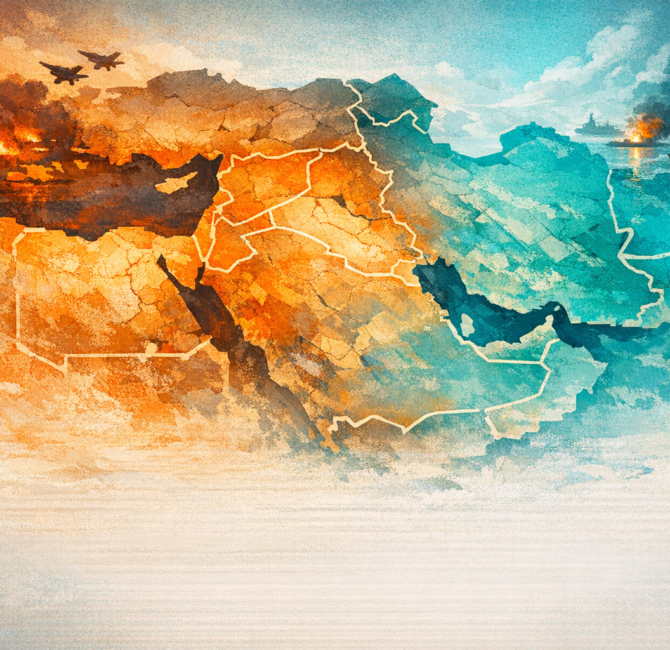


On the Historical Role of the Spiritual Leadership of the Druze Monotheists Community in Swaida
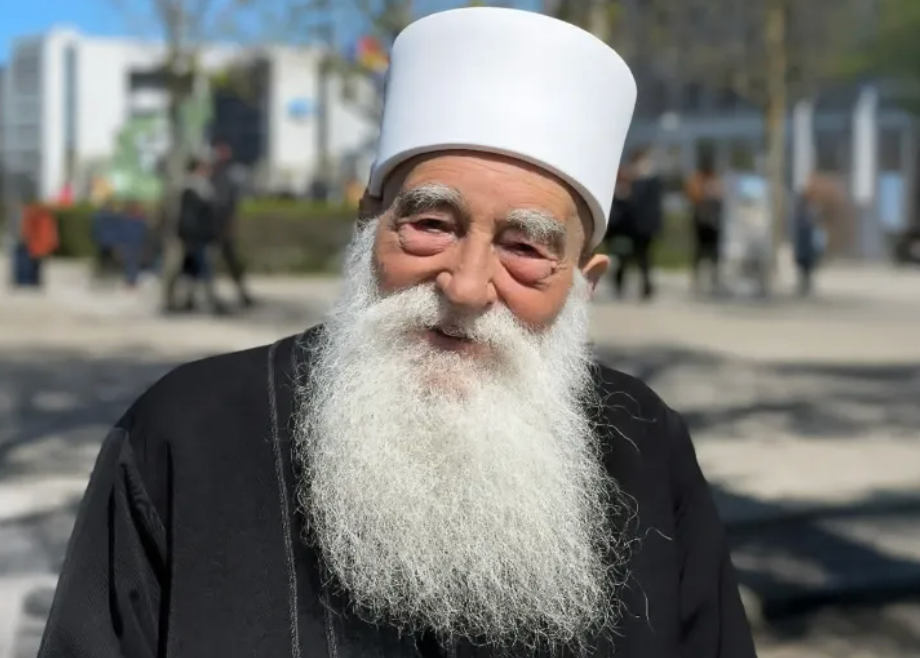
Swaida Intellectual Digital Magazine presents this dialogue as an opening editorial for its inaugural issue, at a moment that demands considerable precision and methodological rigor to comprehend the deep structures of Druze society in Swaida and the roles of its spiritual institutions. This encounter with the Spiritual Leader of the Druze Monotheists Community in Swaida, Sheikh Ḥamoud al-Ḥanawi, places before researchers and interested scholars rare material that illuminates the history of the Spiritual Leadership (Mashyakhat al-‘Aql) in Swaida, its legal standing, and its social and ethical functions. It further presents an analytical perspective on the trajectory of relations between religious authority, society, and the state across different historical periods.
This dialogue aims to open a profound window into the identity of this institution and its role in preserving social cohesion, highlighting how norms and spiritual organizational structures have formed within changing historical and political contexts. It constitutes part of a broader project by the magazine that seeks to present reliable knowledge content based on critical examination of local history and reality, and it paves the way for producing rigorous future research on Swaida and its society.
The magazine’s team contacted Sheikh Ḥamoud al-Ḥanawi on December 1st, 2025, and directed to him a series of questions, to which he responded. What follows is the verbatim text of his response bearing reference number: 3025 (Issue 352), dated December 10th, 2025 CE.
In the Name of God, the Merciful, the Compassionate
The Spiritual Leadership of the Druze Community
Swaida – The Village of Sahuwa Balata
Introduction:
Humanity is a divine purpose, and human societies are akin to life itself, the movement of time, and the cycle of eternity. Cosmic genesis commenced with the inhabitation of the earth and the succession of generations. The community of Druze Monotheists belongs to this human procession that embarked upon a path of development, establishing itself in a distinct corner of this terrestrial globe in pursuit of an identity grounded in attributes and characteristics that manifest personality and distinguish it, becoming known across time, place, and the succession of generations.
Thus, the Druze community, in its civilizational trajectory, sought to ensure its continuity by establishing institutions that organize the affairs of its life in the form of supreme authorities and leaderships endowed with legal personality. Foremost among these was the Spiritual Leadership of the Community (Mashyakhat al-‘Aql).
The Concept of the Spiritual Leadership:
The Spiritual Leadership (Mashyakhat al-‘Aql) is a supreme authority and inheritor of the Imamate, holding fast to the essence of a doctrine founded upon immutable principles built on knowledge of existence, causality, and reason. For humanity is a divine purpose, endowed with the blessing of intellect, thought, and speech, and equipped with supreme wisdom to bear the trust of the message deposited in conscience, loyalty, and commitment through states of faith.
Wherever our community has existed, it has sought means of sustenance and the organization of its life like honeycomb cells. Thus emerged the Spiritual Leadership, this unique authority distinguished by its subtlety and expertise in its responsibilities. This reality necessitates a historical overview.
A Historical Overview:
The Druze Monotheists have inhabited the Levantine lands (Syria, Lebanon, Palestine, and Jordan), with their greatest concentration residing in Swaida Governorate (Jabal al-‘Arab). Mass migration, led by the Prince ‘Alam al-Din al-Ma’ani, commenced in 1685 CE. They represent a blessed tree whose roots lie in the Nile Valley, where the Fatimid Caliphate flourished, and whose branches extended to the Levantine territories. From there, groups settled in Swaida Governorate until its population reached hundreds of thousands of this elite community. They also inhabited Damascus and its countryside, al-Quneitra, Jabal al-Samaq, and lands of diaspora; however, Swaida Governorate became the overwhelming majority of the Druze population. As a result of this settlement, and in accordance with the community’s customary practices, the Spiritual Leadership was formed through constitutional recognition of the community’s status and freedom of belief, by virtue of which legislative decrees and official decisions were issued.
First Question:
When was the Spiritual Leadership established?
Answer: Following the settlement in Swaida Governorate, and after the death of Sheikh Ibrahim al-Ḥijrī in 1256 AH/1840 CE, as documented in the succession of Spiritual Leaders recorded in the book Jabal al-‘Arab, a verified academic thesis by Dr. al-Ba’ini (Appendix pages 452/453).
The community, represented by its spiritual, temporal, and administrative notables, unanimously acknowledged Sheikh Hussain Ibrahim al-Ḥijrī, Sheikh Abu Ali Qassam al-Ḥanawi, Sheikh Aḥmad Jarbu’, and Sheikh Shihab Abu Fakhr as Spiritual Leaders (Shuyukh al-‘Aql). This constituted the first Spiritual Leadership in Swaida Governorate. This formation continued, although the Abu Fakhr lineage did not endure, having been assigned the religious judiciary for a single period thereafter. Thus, the Spiritual Leadership continued through these three families (al-Ḥijrī, Jarbu’, and al-Ḥanawi) and remains so to the present day.
Second Question:
Is there an official law, decree, or decision?
Answer: During the Ottoman period, imperial decrees (Farmanāt) were issued from the Sublime Porte or from the Governor of Damascus in accordance with Ottoman regulations. This practice continued during the French mandate through the issuance of laws throughout their period of rule, which was characterized by political instability.
Regarding the era of national governments, all constitutions issued in Syria across its various periods, upon our examination of them, have recognized freedom of belief and the characteristics of the sects and components of the Syrian people, which is founded upon pluralism. This recognition began with the Hashemite Constitution in the Faisal era and the establishment of the Syrian Kingdom, which was short-lived. However, that constitution remained a reference point for subsequent constitutions of republican regimes. For example, the Hashemite Constitution stipulated: “Freedom of belief and religion shall not be violated.”
Article 14: Pertains to the administration of religious courts and sectarian councils that adjudicate in accordance with their respective jurisprudence in matters of personal status and sectarian law.
In light of all constitutions, laws and decisions were issued according to the requirements of circumstances.
An example is Decision No. (60 L.R.) issued on 13 March 1936 CE, which contained the system of sects, determined their recognition, and defined them according to their personal legal systems and historical foundations.
Another example is the Legislative Decree issued by the President of the Republic No. (174) dated 22 October 1949 CE, comprising ten articles. Article Nine of this decree considers the (Majlis al-Iftāʾ) Council of Jurisprudence (the Spiritual Leadership) to be composed of the honorable Ibrahim al-Ḥijrī, Aḥmad Jarbu’, and Yahya al-Ḥanawi. In the event of a vacancy or the incapacity of any member, his successor shall be chosen.
Regarding the personal status affairs of the Druze community, Article (307) stipulated the legal capacity of both spouses, the validity of marriage contracts, the prohibition of polygamy, the irreversibility of divorce, and jurisdiction over engagement, marriage, divorce, and wills.
Third Question:
Is there in Syria a legal framework similar to what is practiced in Lebanon regarding the regulation of the Spiritual Leadership?
Answer: There exists in Syria a legal framework similar to that in Lebanon, which is consonant in essence as it encompasses a single sectarian system. However, it differs in procedures and certain details, as well as in selection methods, customary practices, laws, formal recognition, and succession procedures following a vacancy. This difference also stems from the nature of the political system in Lebanon, which is based on sectarian representation, whereas the political system in Syria is founded upon institutional structures subject to transformation.
Fourth Question:
Does Syria possess an official spiritual body for the Druze community similar to that existing in Lebanon?
Answer: There exists something analogous, though with significant differences that cannot be readily compared due to the divergence in political systems, as we have previously explained in the foregoing paragraph.
Fifth Question:
What are the primary tasks that the Spiritual Leadership performs today?
Answer: The Spiritual Leadership has played a substantial role in the life of the community in light of the responsibilities entrusted to it. Its role has not been limited to the care of community members alone; it has extended to the welfare of all citizens of the Syrian people. This stems from the standing of the Spiritual Leaders, whose presence became indispensable, particularly given the absence of facilitated relations, which opened the field for the Spiritual Leadership to exercise its role in both community life and Syrian life as a whole. It has achieved mutual respect with the Syrian social fabric in general, particularly following the civil war since 2011 CE. Its role had a substantial impact in establishing civil peace and resolving problems that the community faced during these difficult circumstances.
In accordance with the spiritual system of the Druze Monotheists community, the Spiritual Leaders exercise the following authorities:
- Issuing religious rulings (Fatāwā) on matters of Druze jurisprudence.
- Exercising supreme religious authorities pertaining to the Druze community and issuing directives and prohibitions; appointing authorized officials to conduct marriage contracts and funeral prayers; and appointing committees responsible for the administration of places of worship, sacred sites, and religious endowments (Awqāf).
- Supervising and administering religious endowments and community property.
- Ratifying, collectively or individually, any documents of an official nature.
Sixth Question:
How does the Druze society of Swaida regard the role of the Spiritual Leadership in its daily life in Swaida?
Answer: The Druze community is intimately connected to the Spiritual Leadership because their way of life and all their affairs have been related to this authority. They have become accustomed to approaching its doors without reservation, day and night—a voluntary practice without parallel. All their circumstances and problems, and their public, private, religious, social, and legal affairs are resolved through this authority. It has become an integral part of their lives, to the extent that legal institutions and courts have recourse to them for dispute resolution. It has become a customary, tribal, and civil reference authority in all financial matters, marriage, divorce, reconciliation agreements, and the establishment of civil peace. This has been the case for centuries.
Seventh Question:
What is the significance of sectarian affiliation for you, and how is this meaning reflected in people’s lives?
Answer: A human being naturally subscribes to multiple forms of affiliation, including religious, denominational, sectarian, national, and patriotic affiliations. We adhere to these affiliations and accord them due respect and commitment. Our sectarian existence is inseparable from our patriotic belonging. We have devoted our sectarian affiliation and communal identity to constitute a part of the nation, and we have taken pride in our ethical characteristics and positions so as to serve as a good example to all.
Eighth Question:
How does custom contribute to regulating social relations and resolving disputes within the community?
Answer: Our society is a cooperative society, and like all others, it necessarily experiences both agreement and disagreement. It is an ideal and integrated society; therefore, the Spiritual Leadership plays a crucial role in resolving disputes, promoting civil peace, healing divisions, and addressing issues according to their specific circumstances in order to establish a secure life in accordance with the noble customs and traditions that govern the resolution of blood feuds, the fulfillment of rights, the preservation of human dignity, and the removal of injustice from the wronged. Our customs and traditions are ethical constitutions and systems that we have inherited, and they are held as sacred by all.
Ninth Question:
From your perspective, what is the role of customs and traditions in strengthening the identity of the Druze community and its cohesion?
Answer: As a Druze society, we are distinguished by exemplary characteristics in which our identity has been manifested. These include elevation above trivial matters, preservation of customs and traditions, tolerance, and mutual respect. This has contributed to the cohesion of the community, particularly as the principle of enjoining good and forbidding evil (al-Amr bi-al-Ma’rūf wa-al-Nahī ‘an al-Munkar) has cultivated within us, as an ideal society, a culture of custom and noble traditions of which we take pride before the nations for their beauty. This is what ensures unity of purpose and the prevalence of a secure life for all.
Tenth Question
How is monotheistic and customary knowledge transmitted to new generations within the community?
Answer: Monotheistic knowledge possesses literary characteristics that can only be realized by its seeker through proper preparation to accept its meanings, which cannot be comprehended except through the principle of sound thinking in a sound mind. This can only be achieved through spiritual purity, which the seeker attains according to his level and the spiritual refinement with which he is characterized.
Monotheistic education depends upon the individual’s earnest effort and responsiveness to its concepts, particularly as cultural mixing and the education provided by government institutions have rendered the monotheistic message dependent upon family education and the monotheistic community itself. Often, the role is fulfilled through religious study circles and houses of worship. This has prompted the Spiritual Leadership and religious bodies to direct their efforts toward private activities within sectarian institutions to disseminate monotheistic education among their members and to harness this education toward ethics and conduct that build the monotheistic community properly for a virtuous life.
Eleventh Question
Is it correct that the Spiritual Leadership attempts to strike a middle path to preserve the community and avoid any confrontation or retribution from authorities?
Answer: The best of matters are their moderate courses, and moderation is a state of intellect. One who stands upon the truth does not exceed his station and deals with honesty and fidelity; therefore, he does not fear criticism in the cause of truth. Despite what our community has endured since its inception—injustice, transgression, marginalization, charges of heresy, and killing, even genocide as occurred to us recently—our history and positions remain such that we can only conduct ourselves according to the attributes and characteristics for which we are known. These are the foundations of life and existence for us, and moderation remains a position of truth and a balance of justice.
Twelfth Question
How has the Spiritual Leadership dealt with authorities throughout its history, from the Ottoman era, through the period of French mandate, to Ba’athist rule and to the present time?
Answer: Syria, by virtue of historical events, is a land of invasions and conflicts due to its location and nature. During national periods, it has been a land of coups and transformations. It has not known stability in governance, which is the foundation of the earth and the key to peoples’ security—governance founded upon legislative, executive, and judicial authorities whose objective is to protect the people through constitutional justice and law.
Our dealings with these eras depended upon their commitment to these principles. When violations occurred, we stood against them and restored them to righteousness. We have sacrificed thousands of martyrs, and history testifies to us, and victory was our ally by God’s grace.
Thirteenth Question
What advice do you offer to researchers and students concerning Druze affairs, particularly the Druze of Swaida?
Answer: According to our law and concepts, we prioritize wisdom and reason, and this leads us to sincere counsel. What we say to researchers at all levels, and particularly as I was a teacher who spent my life with students of knowledge at all stages, is this: Knowledge is a sacred trust, and the pen is the writer’s conscience and his instrument of justice. The pursuit of knowledge is an obligation upon those of understanding, and its fruit is conscious thought and sound judgment through a sound mind. Research represents the highest degrees attained by pioneers of knowledge and science and specialization.
And in conclusion, I wish for you success and guidance in seeking the truth. I advise every student of knowledge and researcher to be exemplary in his conduct, faithful in his research, and to write and investigate far removed from subjectivity. For sciences are transmitted through their truths; they are treasures that future generations shall inherit. As for students of knowledge and researchers from among our people, I call upon them to study the history of their fathers and ancestors, for it is a noble and glorious heritage that must be placed before future generations.
Our thanks are extended to you for the work you undertake concerning our heritage, which is a message for the people of knowledge, and we are prepared to cooperate with you.
And God grants success.
Peace and God’s mercy and blessings be upon you.
Spiritual Leader of the Druze Monotheists Community
Ḥamoud Yaḥya al-Ḥanawi
Editorial Conclusion
This dialogue offers more than a historical account of the Spiritual Leadership (Mashyakhat al-ʿAql) of the Druze Monotheists Community in Swaida; it provides a rare primary source through which the internal logic of a long-standing religious and social institution can be examined from within. Beyond its descriptive value, the interview reveals how religious authority has historically functioned as a mediating structure between society, custom, and shifting political orders, particularly in contexts marked by state fragility or transformation.
From an analytical perspective, the responses illustrate that Mashyakhat al-ʿAql cannot be understood solely as a religious institution in the doctrinal sense, nor as a political authority in the conventional meaning of governance. Rather, it emerges as a socio-moral reference framework that derives its legitimacy from communal trust, customary norms, and historical continuity. Its authority operates primarily through mediation, ethical guidance, and the preservation of social cohesion, rather than through coercive or formal legal mechanisms.
The dialogue also highlights the adaptive capacity of this institution across different historical periods, including Ottoman rule, the French Mandate, the post-independence Syrian state, and the current phase of profound political and social uncertainty. In each of these contexts, Mashyakhat al-ʿAql appears to have renegotiated its role in response to changing power configurations, while seeking to maintain a degree of autonomy grounded in communal consensus and customary legitimacy.
By publishing this dialogue, Swaida Intellectual Digital Magazine does not seek to endorse or contest the positions expressed by the interviewee. Instead, it aims to provide researchers, scholars, and interested readers with carefully documented material that contributes to a deeper understanding of Druze social organization, religious authority, and legal-customary practices. This text is intended to serve as a foundation for further critical inquiry into questions of leadership, legal pluralism, and community governance in Swaida and comparable contexts across the Levant.
Published after review and approval by the guest.
P.S: The original text, submitted by the author in Arabic, has been translated into French and/or English using artificial intelligence tools, with subsequent human revision to ensure accuracy. The original Arabic version remains the definitive reference for the author’s ideas, arguments, and scientific content, and is consulted in case of any discrepancies or interpretive issues between language versions
Swaida Intellectual Digital Magazine. (2026). Vol. 1(1). ISSN: 3099-3172 (online).